Between the political firestorm that is engulfing nearly 250 years of American democracy and the actual wildfires that charred whole neighborhoods of southern California, optimism has been in short supply lately. As much as I try to keep a positive tone in these
monthly epistles, I admit to struggling in recent weeks. I've had to dig deep to find the positive.
Poetry has been a lifesaver for me. I have always enjoyed reading the work of great poets past and present and composing poems of my own. Lately I've found that reading and writing poetic verses has kept hope alive for me. Rather than ignoring or denying the tragic realities of contemporary life, poems give me a different
lens for interpreting the present state of the world. They offer alternative possibilities for understanding what may lie ahead.
I don’t assume that poetry works for everyone. But I want to believe that everyone has something that brings joy and positive energy into their life. Now more than ever we need the clear, cold waters of our own sources of hope to douse the cynical flames of despair that threaten us all. I hope
that you can embrace whatever gives you energy and enthusiasm.
Wishing you a joyous and hopeful day,
Tom
Recent essays
Books I Never Wrote: Or, haven't written yet—but, maybe
someday: Three unwritten book ideas wait in my computer's "Maybe Someday" folder: Cooked, a biography of Jay Cooke, the nineteenth-century banker, railroad tycoon, and evangelical promoter of the American West who made Yellowstone National Park possible; Two Kings and a Saint, a study of internationally recognized iconic places in Memphis, Tennessee; and What’s the Plan?, a memoir of my father’s final years.
Will any of these ideas become books? Maybe, someday.
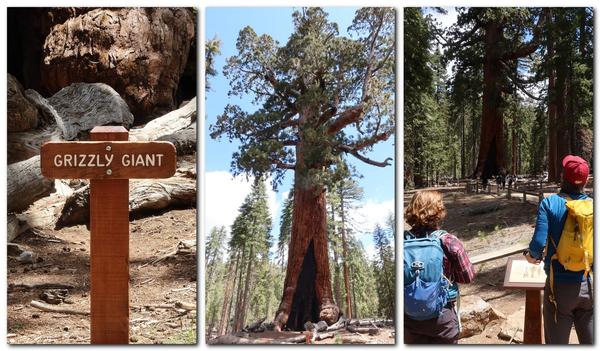
Standing Before the Grizzly Giant: A repository of
wisdom: The Grizzly Giant sequoia, the oldest and largest tree in the Mariposa Grove of Yosemite National Park in California, sprouted millennia ago. For centuries, it spread its roots wide, arched its massive branches skyward, suffered thunderstorms and blizzards, raging fires and years of drought. In a second-person contemplation of this enormous tree, I consider how it holds wisdom in every fiber of its being.
Santa Elena Canyon, Big Bend National Park (Photos by T.S. Bremer)
Winter is a great season for visiting Big Bend National Park. It borders Mexico for 118 miles along the Rio Grande. A favorite destination is the
mouth of Santa Elena Canyon where the river exits the steep walls of the picturesque canyon.
Up close, the sheer cliff plunges into the river, leaving no room for a riverbank.
Viewed from the site where a farming couple built their home in 1918, Santa Elena Canyon appears as a large cleft in the abrupt uplift of a ridgeline rising steeply above the desert.
News, Commentary, and other items of interest
Finding hope on butterfly wings: "Each day I seek my microdose of hope, and when I do so I feel gratitude." A Microdose of Hope | Mountain Journal
Seaweed as an alternative to plastic: "Seaweed is a resource that requires no arable land
and freshwater to produce. It grows quickly, sequesters carbon, and is strong and flexible." Seaweed is the most generous material on Earth | Imagine5
Grand Teton National Park gets additional
acreage: “The land is the gateway to the 200-mile-long Path of the Pronghorn—the longest terrestrial migration route in the Lower 48 states.” Feds Buy Kelly Parcel, Conserving Last of Unprotected Land in GTNP | Mountain Journal
Sometimes, I just want to get lost
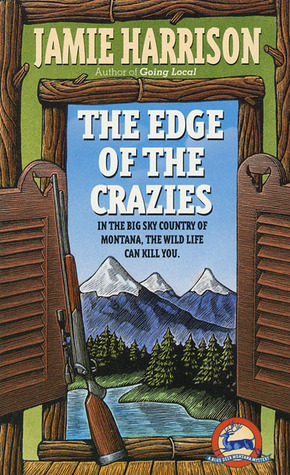
in a good murder mystery. Harrison's series of Jules Clement novels revolve around the small-town Montana sheriff Jules Clement. The setting and characters have some resemblance to the Netflix (originally A&E) TV series Longmire, though with better writing and story (with apologies to author Craig Johnson, who wrote the Walt Longmire novel series, which I haven't read–I imagine his novels also have better writing and story than the TV series). Harrison’s story kept me intrigued, but I
especially enjoyed the setting in the Yellowstone region of Montana.
Grackles at the Bird Feeder
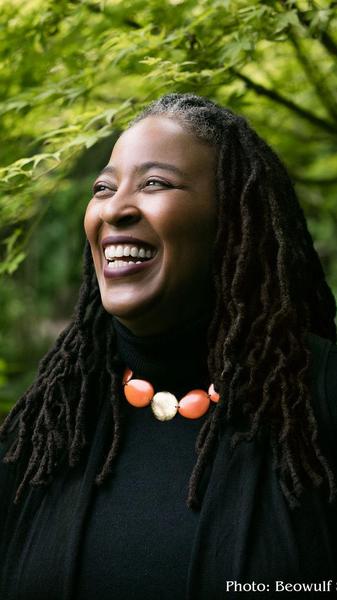
Poet Camille T. Dungy has authored several books, most
recently Soil: The Story of a Black Mother’s Garden (Simon & Schuster, 2023). She edited the acclaimed anthology Black Nature: Four Centuries of African American Nature Poetry (2009). In a 2010 interview, Dungy said about Black nature writing, “I miss seeing writers of color in the conversation. Until we have greater variety in the conversation, it is not a conversation—it is a monologue.” The National Endowment for the arts has said about her work, “In a
genre long dominated by white voices, Dungy explores these entangled connections between humans and nature from her position as a Black woman in the United States. She does so with precise detail, rhythmic lyricism, and a broad inclusiveness.”
Frequently Asked Questions: 10
Do you see current events differently because you were raised by a black father and are married to a black man?
I am surprised they haven’t left already —
things have gotten downright frosty, nearly unbearable.
A mob of them is apparently mouthing off outside
when I put down my newspaper and we all gather
to stand beside my daughter in the bay
of kitchen windows. Quiscalus quiscula:
this name sounds like a spell which, after its casting,
will make things crumble into a complement
of unanswerable questions. Though, if you need me
to tell you God’s honest truth, I know nothing
but their common name the morning we watch them attack
our feeder. I complain about the mess they leave. Hulls
I’ll have to sweep up or ignore. My father —
who I am thankful is still alive — says We could use
a different kind of seed. A simple solution. We want that
brown bird with the shock of red: the northern flicker.
We want western bluebirds, more of the skittish
finches. But mostly we get grackle grackle grackle
all day long. Can it be justifiable to revile these
harbingers? They scoff all we offer
and — being too close and too many — scare
other birds away. My husband says, Look
at all those crackles. I almost laugh at him,
but the winter air does look hurtful
loud
around the black flock. Like static is loud when it sticks
sheets to sheets so they crackle when pulled
one from another. And sting. My father — who is older now
than his older brothers will ever be — promises
he will solve the problem of the grackles
and leaves the window to search for his keys.
The dawn sky — blue breaking into blackness —
is what I see feathering their bodies. The fence
is gray. The feeder is gray, the aspen bark. Gray
hulls litter the ground. But the grackles,
their passerine claws — three facing forward, one turned
back — around the roost bar of the feeder, are
so bright within their blackness, I pray they will stay.
–
Camille T. Dungy
[Source: Poetry Magazine (2015) – this poem is the last of Dungy’s “Frequently Asked Questions” in her Trophic Cascade poetry collection (2017)]
I would love to hear from you.
You can reach me by replying to this email or clicking on the Contact button.